Overview:
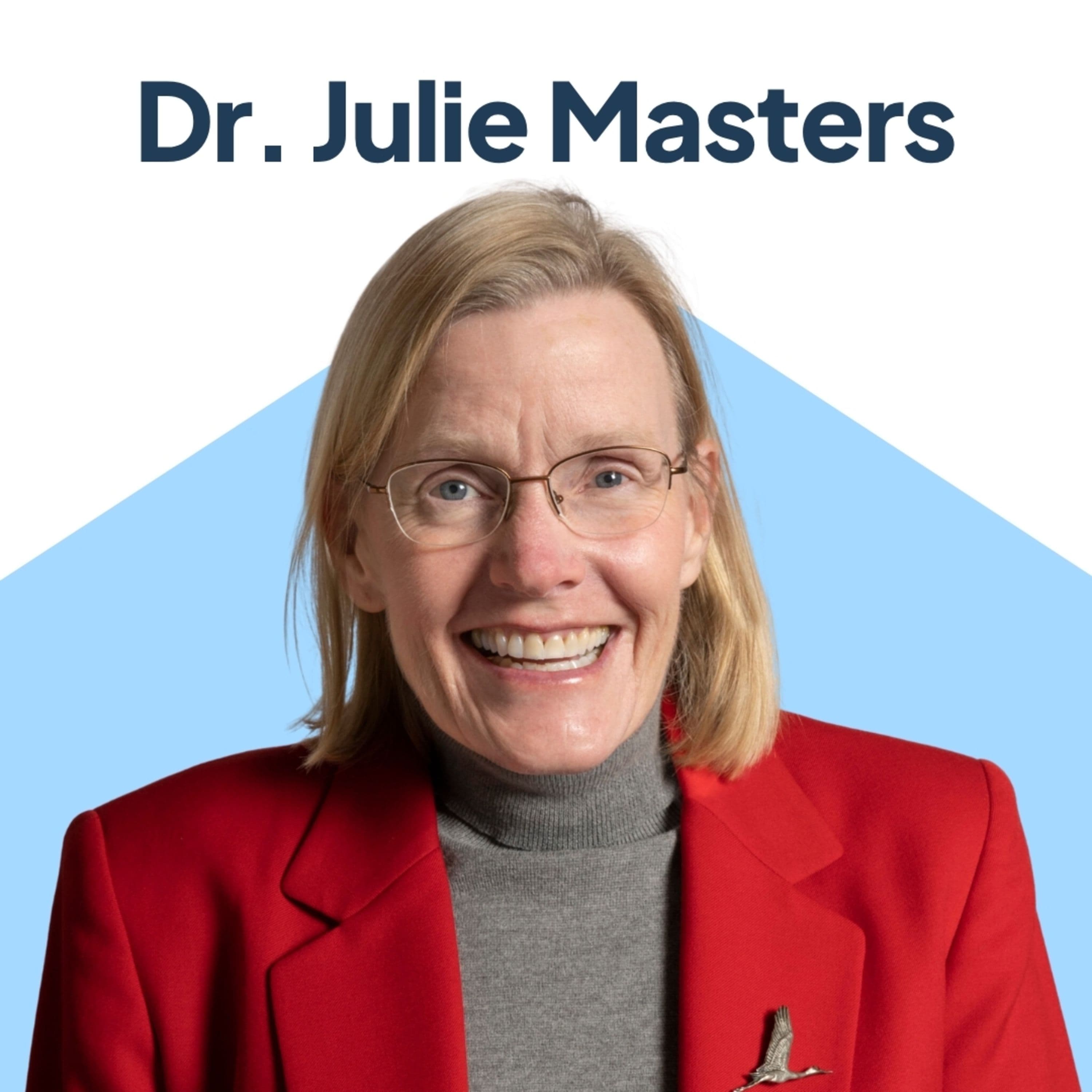
Dr. Lakelyn welcomes gerontologist Dr. Julie Masters for a thoughtful conversation about what it means to be there for someone we love at the end of life. Together, they explore why accepting death can be especially difficult for family caregivers, including how the loss of a loved one can also bring changes to a caregiver's identity and sense of purpose.
They also discuss life review, meaning and connection, including ways families can create meaningful moments with loved ones experiencing memory changes. Dr. Masters shares perspective on how caregiving may shift at the end of life, from doing and fixing to simply being present, and how families can navigate letting go and saying goodbye.
In this episode:
- 05:03 Why society fears death
- 12:03 Hidden meaning inside hospice
- 15:02 Identity shifts in caregiving
- 20:46 4 phrases to say first
- 25:31 Waiting to pass alone
- 33:24 Processing relief after loss
- 37:34 Dementia and the end of life experience
- 46:33 Proof you've done enough
Highlights:
- Why accepting death can be especially difficult for family caregivers
- How caregiving shapes our identity and what happens when that role begins to change
- Using life review to create meaning and connection, including for people experiencing memory changes
- Understanding the emotional changes that can come as a loved one approaches the end of life
- Redefining caregiving through presence, letting go and saying goodbye
Helpful links from this episode:
- Caregiver Chats Ep. 42: “Hospice and End-of-Life with Jules Stracquadanio”: Listen on Apple or Spotify. Watch on YouTube.
- Caregiver Chats Ep. 53, “Let’s Talk About Death with Lisa of Death Deck”: Listen on Apple or Spotify. Watch on YouTube.
- Learn more about the Department of Gerontology at University of Nebraska-Lincoln.
- Area Agency on Aging, Lincoln, Live & Learn podcast
Transcript:
Disclaimer: This transcript was generated using artificial intelligence. We strive for accuracy, but minor errors and slight timestamp differences may be present due to platform differences.
[00;00;00] Dr. Julie Masters: We know that as people are coming to the end of their lives, they tend to pull away. So even though we may not want them to pull away, they're doing it. They're going to pull away. Because the things that honestly like the things that matter most are right there. It's not all the awards or the accolades or all the cars, boats, homes, whatever.
[00;00;25] Dr. Julie Masters: It's right there. That's what mattered.
[00;00;33] Dr. Lakelyn Eichenberger: Hi, Dr. Lakelyn here. Welcome to Caregiver Chats. I'm a gerontologist and caregiving advocate for Home Instead an honor company. I'm so glad you're taking the time to join me. These conversations are a space for learning, reflection, and support. And I invite you to subscribe to Caregiver Chats on Apple, Spotify, or wherever you get your podcasts. We've had some really meaningful conversations on this podcast about end of life.
[00;00;58] Dr. Lakelyn Eichenberger: Today, I want to explore another side of the conversation what happens emotionally when death is no longer something we're planning for, but something that's becoming very real for someone we love? I think this can be especially complicated for family caregivers when you've spent months or years caring for someone. Caregiving can become part of your routine, your relationship, and even your identity.
[00;01;22] Dr. Lakelyn Eichenberger: Approaching the end of that person's life can mean confronting not only their loss, but a major change in your own life. We're also going to talk about something that I'm really looking forward to exploring life review meaning and connection, and the importance of being present. I can't think of anyone better to have this conversation with than someone who has had a profound influence on my life and journey as a gerontologist.
[00;01;48] Dr. Lakelyn Eichenberger: Dr. Julie Masters is the Terry Haney Chair of Gerontology and professor at the University of Nebraska. Her teaching and research have included death and dying, grieving, end of life planning, caregiving, and healthy aging. Dr. Masters has been a mentor of mine, so this conversation is especially meaningful. Julie, thank you so much for joining me today in the Caregiver Chat studio.
[00;02;12] Dr. Lakelyn Eichenberger: I am delighted to have you here.
[00;02;14] Dr. Julie Masters: Oh, Dr. Lakelyn, I am just beyond pleased to be in your company. Thank you very much.
[00;02;19] Dr. Lakelyn Eichenberger: Well, you have been really a mentor to me throughout my career. You helped inspire me to pursue gerontology. Our catchphrase together as gerontology has changed my life, which it truly has. And I know you're such a big advocate for gerontology education, and you've been teaching Death and Dying as a class for many years, and that was one of my favorite classes, honestly.
[00;02;42] Dr. Lakelyn Eichenberger: I still think about a lot of the lessons I learned from that classroom. Really excited to talk more about kind of end of life and how caregivers, can kind of think through or give them some resources for that experience, because most caregivers will journey with their loved one through the end of their life. So, since you spent a lot of your career setting this topic, what drew you to this area?
[00;03;08] Dr. Lakelyn Eichenberger: I'm so curious to know. I don't think I've ever asked you that question.
[00;03;11] Dr. Julie Masters: Well, first of all, that's a great question, but I'm going to back up for just one second. Okay. And that is to say, in a lot of ways, Lakelyn, you've been a mentor to me, but in terms of what you've been able to accomplish in your career, but your enthusiasm and really not only the passion but the compassion you bring to caregiving and just the really finding ways to support people during a challenging time.
[00;03;38] Dr. Julie Masters: So I just I need to say that's a pretty important thing.
[00;03;42] Dr. Lakelyn Eichenberger: Thank you. One you're welcome.
[00;03;45] Dr. Julie Masters: So you asked the question, what drew me into this? Well, I've been probably you know, I've been in gerontology, having completed a master's degree in 1985. So that's 41 years of thinking and studying about aging. But as far as the dying part and while that was included in the curriculum, both that my master's level and then subsequently my doctoral level, it was the death of my mother rather suddenly in 1992 that really changed the way I thought about life and living.
[00;04;19] Dr. Julie Masters: And so, having had that experience, the department chair at the time, Jim Thorson, Dr. Jim Thorson, had determined that because I had gone through that experience, that I could speak a little more honestly or authentically about what it means to have someone die that you love.
[00;04;43] Dr. Lakelyn Eichenberger: Well, and you do speak so authentically, I can attest firsthand. And you made such a meaningful class for the death and death and dying topic. And I think what's so unique about you, Julie, is you have such a gift in how you talk about the subject. You even can bring some humor and lightness to it, which I appreciate because I think as a culture, death is still so scary.
[00;05;04] Dr. Lakelyn Eichenberger: I mean, it's inevitable we all will pass away someday, but we have such a fear as a society of death, or we kind of are like a death defying society. Why would you say that is what contributes to that?
[00;05;17] Dr. Julie Masters: Well, I think there's a couple of things. One, we're very linear, and that just makes sense. We're born and then we've got this trajectory. So life becomes important to us, right? We're drawn to that. But I think the other thing is that if we haven't really thought deeply about what that last breath will be like, we continue to almost be on this treadmill.
[00;05;42] Dr. Julie Masters: I'm trying to get through life without really taking a moment to say what really matters, what mattered about my life and for the time I have remaining. What am I going to do with that with that time? How am I going to make a difference?
[00;05;59] Dr. Lakelyn Eichenberger: Yeah I think you're so right. We get so focused on the living part that we don't really think about the passing on part. And I think to, you know we, we have a lot of sometimes fear around death because many of us haven't seen it or experienced it. And I think a lot of times when caregivers are in their role, they're in in that role for the first time, often, maybe the first time they've ever cared for a loved one.
[00;06;24] Dr. Lakelyn Eichenberger: So there's so much unknown about that end of life. And so I think, you know, learning about it, listening to podcasts like this to kind of demystify, okay, what is end of life going to look like? I think that can help kind of come to terms with the fact that it will happen and help equip you. I don't think you'll ever be truly prepared.
[00;06;41] Dr. Lakelyn Eichenberger: Like I think back to my first client at home. Instead, when I worked at the franchise, the first client that I served that was on hospice and I had to fill in for a care pro who was sick and I was petrified. I'd never been around somebody who had passed or was that near to passing away. And I just remember thinking, please don't die on my watch.
[00;06;59] Dr. Lakelyn Eichenberger: Please don't die on my watch. And as I reflect back and like, actually, what a gift that would have been to be with that woman as she passed on. But again, I was I, I never encountered it before. So then when the next client I had that was on hospice, was nearing the end, I was a little more comfortable.
[00;07;16] Dr. Lakelyn Eichenberger: So I think to sometimes there's so much unknown. And when you do experience it, it becomes less scary, if that makes sense.
[00;07;23] Dr. Julie Masters: It does make sense. You know, you think about when someone takes their last breath. That really is a grace moment. There can be times though, and I think when you when you talk about hospice, the, the service or benefit of hospice can really be a way to complement the work that the caregiver is already involved in, but also to be able to, maybe quiet some of the fears that the caregiver has about what those last moments will be like and that they're not going to be left alone, but there's going to be someone there to journey with them.
[00;08;03] Dr. Julie Masters: You know, it's interesting that in a culture where we are fearful of death or the dying process, that even though, for instance, someone may say, I want to be allowed to die at home. This is where this has been my home the whole time. This is where I want to die. But sometimes family members panic because they think, oh, this is not good.
[00;08;28] Dr. Julie Masters: We need to give the person IVs. We need to make sure that they're in a hospital environment. Because we've really been schooled in this medical model. We've been trained to think that. And by the way, there's nothing wrong with medicine. But there is also a benefit of more of the comfort or the palliative side of things. And so a family member may be really so frightened at the loss of a loved one that they may call the ambulance and say, we got to go to the hospital, even though that's not what the person wanted.
[00;09;03] Dr. Julie Masters: But again, it's understandable because it can be scary. It can be frightening when, when we live in a culture that avoids death, then for the family members who are now facing it, they really don't have. And you alluded to it, they really don't have a lot of resources to turn to. Yeah. And so that's where hospice can be just a terrific resource, if you will, to use that word again.
[00;09;32] Dr. Julie Masters: Supplement to the care that the person's giving.
[00;09;35] Dr. Lakelyn Eichenberger: Yeah. The old saying is true. You can't pour from an empty cup. But let's be real. As a family caregiver, taking a break is often easier said than done. Whether you're caring for a loved one. Managing stress at work. Taking care of your children, or maybe all three, everything adds up. Caregiver burnout is real and can affect you in more ways than one.
[00;10;00] Dr. Lakelyn Eichenberger: When you need a break to rest and recharge, Home Instead is here to step in with personalized respite care. Whether it's a few hours a week to run errands or longer term support, our care pros help support your loved ones safety and engagement. Home instead is here to help support your family. Schedule a free care consultation at Home Instead.com.
[00;10;23] Dr. Lakelyn Eichenberger: I agree, and we talked on an earlier podcast episode of Caregiver Chats about hospice and some of the myths because I think two families have this notion of if we go into hospice, we're giving up. But in fact, there's just so many resources that hospice provides. There's a whole team of people that come alongside you, walk with you, help you understand.
[00;10;43] Dr. Lakelyn Eichenberger: Okay, these are some signs that you should be looking for. Or give us a call if you're nervous instead of calling 911. So you have so many great resources through hospice. And so, I think that it's underutilized. And I'm sure the research I remember from your, your class that the, the research shows that it's underutilized or people think that, you know, once you go on hospice, you pass away right away because people wait too late.
[00;11;07] Dr. Lakelyn Eichenberger: And often that does happen.
[00;11;08] Dr. Julie Masters: That can happen. You're right. You're right. Sometimes people just want to hold on, hold on, hold on. They're in hospice. They get admitted into the hospice service in the morning and they're gone by nightfall. That's why the average length of stay in hospice is, is so much lower than what the benefit could could offer. But what the research tells us is that when people can benefit from hospice service, from the comfort care, from the palliative care, by the way, they tend to live a little longer.
[00;11;41] Dr. Julie Masters: Maybe it's a month, two months, but they and there's even people that graduate from hospice. Now those numbers are much smaller. But going back to this idea of hospice, there's a dear, geriatrician who also oversaw a hospice service, doctor Natalie Manley, who works with Emmanuel Pathways. And she has presented to the class where she's talked about the word hospice.
[00;12;08] Dr. Julie Masters: And in that word is the word hope that if you really if you, you know, if you take out the age old P, you see. Oh yeah, it is hope and even Kubler-Ross who people often reference. And we won't go down the road of the five stages. The question about that. But even Kubler-Ross said hospice is another word for hope.
[00;12;33] Dr. Julie Masters: And but the hope is different. And again, that's where we shift from a linear view that says birth. And that first breath is the most important. And so we're just going to keep going down the road to now we're going to re engineer our thinking, to see that our last breath is the most important. So they're both very important.
[00;12;59] Dr. Julie Masters: Let me let me be clear about that. But it's that last breath that says where do I want to be the late Sarah Rowan. Where is my room of comfort? Where am I going to have the support that I need? So this space isn't so frightening for everyone, but it gives me a chance because it's the only thing I can do.
[00;13;20] Dr. Julie Masters: Nobody can die for me. I have to do it myself. But can I have the kind of support that I need that makes that last moment meaningful?
[00;13;33] Dr. Lakelyn Eichenberger: That's a beautiful way to look at it. I've never heard the hope within hospice and I love Doctor Manly. So we have to give her a shout out. Yeah. She's a good soul. And I think if we can get more and more people to view it that way, I think we can start to destigmatize, you know, and, and lessen the fear around end of life, you know, and I would add to that the, the whole idea of a more intentional focus on end of life planning and end of life planning, that would include, where do I want to be?
[00;14;06] Dr. Lakelyn Eichenberger: Who's going to be there in my life, who will provide that support? But I would add to that thing such as advanced directives. Yeah. And by the way, an advance directive doesn't mean that you're giving up or that you want things stopped. You could say with an advanced directive, I want you to do everything possible to keep me alive.
[00;14;26] Dr. Lakelyn Eichenberger: And that is absolutely fine. But now people know what you want and so can act accordingly. When people have not had the opportunity to express what they'd want done or not want done, we tend to make decisions in a vacuum that may not reflect that person's intentions. Yeah, we also know in terms of end of life and particularly with spouses, that husbands are more likely to do everything possible to keep their wife alive, as opposed to the wife who is saying, you know, it's okay to let me go.
[00;15;02] Dr. Lakelyn Eichenberger: But again, we just it is so hard for us to imagine a life without that person. I think that is probably one of the pieces to this puzzle. Is that a caregiver caring for a loved one, whether it's a spouse, an adult or a parent or a sister or, anyone that you love in your life, you're the caregiver becomes such a great part of your identity, your.
[00;15;25] Dr. Lakelyn Eichenberger: And so when you're going through this process of the loved one passing, there might kind of be in the back of your mind. You might not recognize it at the time, but holding on because, okay, well when you when you're gone. What happens to me? How does my role 100% change? Who am I as a person without caregiving as part of my identity?
[00;15;46] Dr. Lakelyn Eichenberger: So be curious to know if you have any thoughts on that. Well, I want to go back when you talk about identity, and I think about the late Carl and his colleague run amok, who talked about the caregiver identity theory. And it's one of those things. Until you accept that you're a caregiver, you really don't see that you're in that role.
[00;16;06] Dr. Lakelyn Eichenberger: But once you do, to your point, it really becomes the badge of honor that you wear because that's who you are today. And so this idea of so much, I may have had to have given up my job. I may have had to give up my home to come live with you. I mean, there's so many things that a person may have given up that now there are 100% into it, and you know that.
[00;16;33] Dr. Lakelyn Eichenberger: I mean, you're the caregiver expert, right? People go. They lean in 100%. I keep saying that to this role. And now this person who has given them a sense, them a sense of meaning and purpose may not be here anymore. So where do I find my sense of meaning? Where do I find my purpose in life? And that's, I think, something that a lot of caregivers like, once they're through it, they have to spend some time, figuring out who they are as a person, getting their own health and well-being back on track.
[00;17;06] Dr. Lakelyn Eichenberger: Because we see so often they put those things on the back burner to, and it takes a while, to, to kind of journey through that. I've heard many, many caregivers talk about that. Did you have something to add? Well, I you know, I think something there's two things we know in terms of grief. There's no timetable and you know that.
[00;17;27] Dr. Lakelyn Eichenberger: Yeah. And it's this idea of now it's your point about I have to think about who I am now. There's the state of liminality and I'm. And in between. And who is this person that is now left behind? All the things, all the medical supplies, all that linens, all those things, you know, the skeletal remains of this relationship are left behind.
[00;17;56] Dr. Lakelyn Eichenberger: But so am I. So who am I in that picture? I think it's worth noting to that. We sometimes see, particularly when we have older couples older, and when I say older, I'm talking 80s 90s even older than that. Who are the primary caregiver that sometimes what can happen is that the caregiver themselves will die before the person that they're there supporting dies.
[00;18;24] Dr. Lakelyn Eichenberger: And so this question of have they thought about what they'd want done or not want done? And I think that's where Lakelyn, you know, being more intentional is about and it's also about being responsible to say, even though I don't want to think about dying in death, we need to take a minute or two or 5 or 10 to really think about the what ifs.
[00;18;50] Dr. Lakelyn Eichenberger: What if something were to happen to the caregiver? What's going to happen to this person? Just as parents, young parents, think about particularly when they're writing a will or something. What would happen if something were to, God forbid, God forbid, something that happened to us? Who's going to take care of the kids? Caregivers also have to take a moment to think about if something happens, who's in charge.
[00;19;15] Dr. Lakelyn Eichenberger: Yeah, that's that's really important. And so often we don't see that take place. And so families are thrust into crisis. And in those situations people maybe aren't thinking clearly. They might not have all of the options available because they're just having to make a decision in that moment. And so having those conversations ahead of time are so important.
[00;19;35] Dr. Lakelyn Eichenberger: And we talk. I feel like I talk about that at nauseum on this podcast about cleaning ahead, but I think people just don't do it. And so we need to keep talking about it in various aspects. And so I think that this this is an important topic when it comes to, you know, end of life, not only what are the wishes of the person I'm caring for, but what would happen if something happened to me?
[00;19;55] Dr. Lakelyn Eichenberger: I'm so glad that you brought that up, Julie. Right. Well, I know that we've talked kind of about the fears around death and as a society and, we've talked a lot about the benefits of hospice. There's a lot of emotion, that surrounds this, this topic of end of life. And, you know, I remember from, from your course and what I've learned through my gerontology studies is, you know, connecting to that meaning and purpose in your life, that life review as you come to the end is so important for so many reasons.
[00;20;26] Dr. Lakelyn Eichenberger: So I would love to talk more about that. I know that there's a series of questions that you talk about often, that the person that's dying often kind of goes through a reflection on. So could you share a little bit about that? Well, as far as life review, life review is something that, while we tend to think only happens, is we become older people.
[00;20;47] Dr. Lakelyn Eichenberger: People actually engage in life review over the course of their existence. So we were talking about some of the wonderful things that have happened in your life. Well, in a way, that's life review is real because you're going back a little to see where you were at a certain point. But Life Review is this opportunity to see the good and maybe the not so good that has happened and reflect on, you know, I did the best I could given the circumstances, given the hand I was dealt, the cards that I was dealt, I did the best that I could do.
[00;21;24] Dr. Lakelyn Eichenberger: Robert Butler, Dr. Robert Butler is the person who is, credited for that, but also Erik Erikson. And that last stage of development of did my life make sense or was it for not so integrity and despair and so as, as people are coming to the end of their lives, it's are there are there things that I still need to clean up?
[00;21;51] Dr. Lakelyn Eichenberger: And when I say clean up, are there people that I need to ask forgiveness from? So I ox book the four things that matter most. Maybe that's what you're thinking about. That's exactly that's you know, he talked about please forgive me. And I don't know about you. You're you're such a beautiful soul. I doubt you've offended anybody. But you get to be a sister.
[00;22;12] Dr. Lakelyn Eichenberger: You get to be my age. And I've offended people, right? So please forgive me. But the next one then is I forgive you. You know, there's something that can be freeing about that. I think for the caregiver who's thinking, I haven't done enough. Oh, yes, you have. And it's just that glimmer of, yes, you did care for me.
[00;22;37] Dr. Lakelyn Eichenberger: And I'm so grateful. Right? So please forgive me, I forgive you. I'm forgiving ourselves for maybe not doing things and then to say thank you. You know, this this act of gratitude. I was, I had the chance to be on a retreat this weekend, and that was that last conference that was discussed about gratitude and how important that is and how that helps to really, you know, center us in a way that can be so useful.
[00;23;08] Dr. Lakelyn Eichenberger: And then the final is, I love you to say to someone, and, and love is all different degrees and dimensions and so forth. But saying I love you is something that when we are no longer physically together, I will remember. Yeah, right. Tom attic, in his book The Heart of Grief, talks about, you know, that difference between loving and presence and loving and absence and that loving and presence is what caregivers are doing.
[00;23;39] Dr. Lakelyn Eichenberger: Yeah. Whether they're changing sheets or making sure the person's clean or they're getting meals or making doctors or arrangements, appointments or variety of things, but then one day they're not there. That's an act of love. So now I need something which reminds me of that person when they're not there. I met this woman this weekend who talked about her husband, who had died four years ago, and the intensity of that when he first died to today.
[00;24;13] Dr. Lakelyn Eichenberger: And she said, I can look at his picture, and there are days that I feel so good about the relationship we had. And then there are days that I kind of get the I do. It just hurts me that he's gone. And I think that's normal and natural. Yeah, but that's where that love comes in. Thank you so much for sharing those questions.
[00;24;34] Dr. Lakelyn Eichenberger: And I, I had never really thought of it. From the caregivers perspective about how important those four questions are as well. You know, not only for the person passing but for the caregiver to also kind of journey with their loved one through kind of those those four questions. Right? You know, I think it would be disingenuous of me to suggest that it will all be sunshine and roses or some felonies and, you know, and there will be, like, harp music in the background.
[00;25;05] Dr. Lakelyn Eichenberger: That's. Yeah, there will be some people, you know, I call it German love. I hope I don't. Offend the people of the German ethnicity, but German love is you just know we love each other. Yeah. And so those words may not come to the surface, but there is value of saying it out loud. Yeah, well, I think what's so interesting to about maybe components of that life review.
[00;25;31] Dr. Lakelyn Eichenberger: I remember you had us read a couple of books from the perspective of hospice nurses. Witnessing families kind of go through some of these things, and individuals might hold out until, two of their children have reconciled and then they passed peacefully. Or perhaps they're waiting for someone to come in from out of town so that they can get that final I love you.
[00;25;53] Dr. Lakelyn Eichenberger: And then once they do, they pass peacefully. Or maybe they wait for that spouse to leave the room to pass. And so that I get chills. Still thinking about that book and just all of those experiences and, hospice nurses. I mean, what a gift to this earth. They have seen so many different scenarios, but I think that it's important for caregivers also to hear some of these different, stories as well, because I know I've, I've met individuals that say, I can't believe I wasn't there for their last breath.
[00;26;27] Dr. Lakelyn Eichenberger: And, just accepting that maybe, maybe your loved one was waiting for you to leave the room to pass because of whatever reason. So I think that those kinds of stories, kind of weave at times through those end of life review moments. And I think that there's just so interesting and fascinating. I would agree with you.
[00;26;45] Dr. Lakelyn Eichenberger: You know, I think about Kellen and Kelly's book Final Gifts, which is one of those standard books. But that idea, that near-death awareness, right, that when people start talking about loved ones that have come to see them and yet those loved ones have been gone a really long time, you know, it gives us this sense that maybe there is a fine line between this existence and the next if there if people subscribe to that thinking and that idea that we're never really left alone, are we?
[00;27;19] Dr. Lakelyn Eichenberger: Right? So that idea of seeing people who have died previously. And then the other thing is just everything you just said so eloquently about having siblings reconcile or having someone make the call. But then that last point in Lakelyn, thank you for saying this so much, is sometimes people, because we die alone, we need to do it alone.
[00;27;47] Dr. Lakelyn Eichenberger: And so maybe it's to protect, you know, the book Tuesdays with Morrie. It's a great example of how he waited until everyone had left the room. But because he had such a traumatic experience when his own father died, that he. In a way, the author Mitch Albom wrote to suggest, perhaps because he wanted to protect them.
[00;28;11] Dr. Lakelyn Eichenberger: And I think for sometimes we think, oh, I should have been there, but it's something we do alone. It's a grace, grace moment, but sometimes it's we have to do it alone. Well, and sometimes, too. I think people on the flip side need permission to pass from their loved ones. Maybe they're hanging on, hanging on. And I've heard of caregivers share.
[00;28;35] Dr. Lakelyn Eichenberger: You know, I, I sat by my mother's bedside and I said to her, you know, I'll be okay. You can you can pass on, you can leave. And then shortly thereafter, they pass. So that's why I find this topic just so interesting, fascinating. Just the different, emotional components of this whole journey, isn't it? Something where. Because that takes great courage for the caregiver.
[00;29;01] Dr. Lakelyn Eichenberger: Again, back to this question about identity. To be able to relinquish this sense of who I am by saying, it's okay for you to go. On the flip side, you have adult children who are in their maybe 50s or 60s. There's even some that are in their 70s where their parents are still alive, which is such a as, you know, as a gerontologist, such an extraordinary time in our in our world.
[00;29;30] Dr. Lakelyn Eichenberger: Yeah. But there are some that will say, mom or dad please don't leave. And so another thing that you know, the parent can do is to help the, the adult child to know you will be fine. Yeah. I've prepared you in a way that as, as your aging parent, I've prepared you in a way you will be fine.
[00;29;57] Dr. Lakelyn Eichenberger: That's also a very interesting kind of dynamic of it. Is an adult child not wanting their parent to pass, or I think I've seen two when maybe one adult sibling is ready, the other is not. And it can kind of create some tension and family dynamics towards the end, which is always hard and sticky to manage. I was actually watching the show The Pit, on one of the major networks, and it's about an emergency room, and they depicted that exact scenario where the older, father, the doctors were saying, you know, it's probably time.
[00;30;28] Dr. Lakelyn Eichenberger: And the adult daughter was saying, no, I want you to do everything in the sun. Was saying, you know, maybe we should let go. And it was interesting how much the medical professionals were educating the family on, on some of the decisions. So I think sometimes two caregivers shouldn't be afraid to ask those questions of their health care providers or the hospice team about, you know, the things that are happening to their loved one.
[00;30;50] Dr. Lakelyn Eichenberger: Or if we decide to do this life sustaining measure, what does that mean for my loved one? Will it help give them more peace and comfort, or will it cause more suffering? And sometimes that extra information can also help families process. Wouldn't it be great, as you say, this Lakelyn, you know, it's I think about a family where the dad had cognitive issues and he also had cancer in a variety of things.
[00;31;18] Dr. Lakelyn Eichenberger: And the family decided to sign up for hospice. They made that decision. And it what was interesting, though, this is a family that very much loved one another still do still love each other. But sometimes when families have fractured relationships that need mending, they're not able. They don't have the resources, the emotional resources to be able to mend something that's so desperately needs to be mended.
[00;31;51] Dr. Lakelyn Eichenberger: And so this is where, you know, the beauty of hospice is the but you have to sign up for it. It doesn't just happen spontaneously. But the beauty of hospice is having chaplains that are available, having social workers. And I think for, you know, whether, you know, sometimes health care professionals, particularly now, they don't have a lot of time to be able to sit and visit.
[00;32;15] Dr. Lakelyn Eichenberger: Although the beauty of palliative care can't say enough is that they do have more time than your typical physician. I would also say geriatricians have a little more time, which is such a it's just a tremendous blessing. But it's having maybe whether it's chaplain or social work or someone, some spiritual advisor, to be able to come in and have the conversation with the family that the person who really so desperately needs the mandate to say, okay, we can't change what happened.
[00;32;51] Dr. Lakelyn Eichenberger: Yeah, but we can be in the moment. And how how can we make that moment meaningful so we don't put your loved one through anything further? That is only going to delay the process. Yeah. Those those resources can be so, so beneficial. Yes. Very much. And you brought up someone with cognitive impairment or decline. I did want to talk a little bit about that topic, because I think with Alzheimer's or another type of dementia or neurodegenerative disease, there's this anticipatory grief that happens.
[00;33;28] Dr. Lakelyn Eichenberger: The person is still alive, but you're you're grieving who they once were because they're progressing through the disease and they're there maybe losing their memories or their abilities. And so you're kind of grieving them along the way. So I'd love to just talk about, okay, then when end of life comes, some people feel relief. And I think that's normal and okay to, and some people of course, still grieve after the passing, but maybe it feels a little lighter and maybe they're feeling, oh, gosh, is this normal?
[00;33;59] Dr. Lakelyn Eichenberger: I should I feel guilty that I feel this way because I think even in situations where there's not memory a concerns, a caregiver can feel that sense of kind of relief after someone passes, too. I'm really glad you brought that up because it's, you know, there is that sense of I know that this person that I love so much is not is not suffering from tractable pain.
[00;34;26] Dr. Lakelyn Eichenberger: This person that I love so much is no longer having to face a day of confusion that just seems to get worse and worse. And so having that sense of relief comes into play. But I also think, though Lakelyn, I'm going to come back and you use the term anticipatory grief. And it's one of those things that's been helpful.
[00;34;48] Dr. Lakelyn Eichenberger: I mean, it comes from World War Two is when Lindemann was the one that first identified it, and what he observed was that with women whose husbands they had not heard from. Through letters and so forth were beginning to disengage. And as a consequence, we see that today with people that begin to disengage. If I'm a caregiver, we have to think about that term and what that means.
[00;35;14] Dr. Lakelyn Eichenberger: A caregiver may not have the time to disengage, and they may not have had the time even to grieve because they're so focused on making sure, particularly if someone is still ambulatory, they can still walk independently, that they're not trying to leave the house or turn on the stove, or do things that you know are probably not good, but only for them, but for everybody in their in their vicinity.
[00;35;41] Dr. Lakelyn Eichenberger: And so the, the idea of that grief, some may be able to start that others though it may not hit them until everything is done. And back to that. Now what. Yeah. How is it. Because I've been so busy changing sheets. I've been so busy taking the person out of business. I've been so busy trying to take care of that.
[00;36;04] Dr. Lakelyn Eichenberger: I've been trying to do all these things I have. I really haven't even had the time to think this is going to happen. Wait, you left? Who? Soon. We still have things we need to take care of so that. Yeah, that is an interesting perspective. And caregivers are often so focused on all those tasks and, and so embedded in the daily care that I could see how that would be, challenging to actually let the grief, overtake or, or to process that as, as they're kind of going through those tasks each and every day.
[00;36;42] Dr. Lakelyn Eichenberger: You know, you said something to about when somebody signed up for hospice, we may think, okay, they should go, wait a minute. It's week one. Week two. Wait, it's week five. You're still there. You were supposed to. We do the same thing with a diagnosis. Alzheimer's disease as an example or neurocognitive disorder. And we think, well, you have this.
[00;37;06] Dr. Lakelyn Eichenberger: So clearly you can't have memories or clearly you can't do the things that you used to do. But the beauty sometimes is when we don't just see the person as a diagnosis, but we see the person as having is living with as particular process, that perhaps what we don't think will happen does. There was a beautiful woman, Lila Knox Shanks, and she wrote the book.
[00;37;34] Dr. Lakelyn Eichenberger: Your name is Hughes, Hannibal Shanks. She was this very much a, a pivotal leader in the city of Lincoln, particularly for civil rights and so on. And her husband had he was diagnosed with Alzheimer's disease, and he had been non communicative for the last six to eight months of his life. But on that last day of his life, she had asked him, Will you be my angel in heaven?
[00;38;03] Dr. Lakelyn Eichenberger: Now here's somebody who you think has no ability to process. And he nodded his head and she thought, I don't think I got that quite right. I, I just loved Lila. God rest her soul. And then she asked him again because she thought, let's maybe I just miss him. Misunderstood. He nodded his head and she was known to say, greedy as I am.
[00;38;27] Dr. Lakelyn Eichenberger: I asked him a third time because she really wanted to see. Yeah, she said, Will you be my angel and heaven? And he not did his head with such determination, and she thought he's still there. He's changed dramatically because of this horrible disease, but he's still there. And so I think that's the other thing for the for the people that listen to your podcast to understand that there will be that glimmer, there will be those moments that will sustain us over our lives.
[00;39;04] Dr. Lakelyn Eichenberger: Yeah. That's so beautiful. I, I'm so glad you shared that story. Thank you. We talked about caregivers and how, the grief they it might they might process it along the way. It might hit them afterwards. But there is that whole period of, kind of needing to let go. Whether it's maybe earlier on as a person enters hospice or maybe it's after the person passes, some, some caregivers maybe are able to do that easier than others.
[00;39;35] Dr. Lakelyn Eichenberger: But I would I would like to maybe talk a little bit more about the letting go process, because I'm sure for some it's easier than others. May I ask you a question? Sure. When you say letting go. What does that mean to you? Letting the person go. Maybe allowing them, allowing them to go along them to go.
[00;39;54] Dr. Lakelyn Eichenberger: Yeah. To and I wanted to make sure I, I understood where you were going with that because I think letting go means allowing them to continue on their journey. You know, there's the in the Lakota tradition, this idea of walking on when you die, you walk on. So letting go is about that. There will come a time where I, I will no longer be here.
[00;40;21] Dr. Lakelyn Eichenberger: But at the same time, that person who they were and their their spirit and their essence is still with us. I mean, they were in our lives for a reason. And that's we have to remember that remains. I think we sometimes, even if even if it wasn't the best of relationships, there's some little glimmer, there's some little nugget or sliver, maybe a sliver that indicates that this relationship was important and it mattered.
[00;40;53] Dr. Lakelyn Eichenberger: Thank you for sharing that. We could literally talk for hours on this topic, and I know that we I have to check the time even because we have been chatting a while, but, maybe to kind of wrap up, I, I always love on this podcast to provide some kind of practical tips or insights for caregivers so, you know, as their loved one is entering maybe those final days or hours, are there some maybe questions that they could ask their loved one?
[00;41;22] Dr. Lakelyn Eichenberger: Or, is that a time to pull out the pictures and start reminiscing? Are there any kind of tips that you would offer someone if they're kind of in that active dying phase that would be maybe helpful or comforting? So we so we had to understand that for people that are in an active dying stage, they may not be communicative.
[00;41;44] Dr. Lakelyn Eichenberger: That's true. So they may no longer. They may have lapsed into unconsciousness. And so being present with them is the greatest exchange of love that you can have. If I'm going to start asking questions. I would recommend doing that sooner. Yes. Good point. And the thing is, is there's different there's different books and tools and apps people can use.
[00;42;11] Dr. Lakelyn Eichenberger: But sometimes and I really appreciate when you said the photographs, you know, being in your wonderful studio and seeing these beautiful photographs, tell me about this person. Why did they matter to you? What was it that made you laugh? What was it that made brought joy? I mean, so that you get a sense of seeing the world through their eyes, right?
[00;42;35] Dr. Lakelyn Eichenberger: As opposed to your eyes or, What? You know, what are things that matter to you that you were growing up that maybe don't matter now? Because that's a different point, right? We know that as people are coming to the end of their lives, they tend to pull away. So even though we may not want them to pull away, they're doing it.
[00;42;58] Dr. Lakelyn Eichenberger: They're going to pull away. Because the things that honestly like the things that matter most are right there. It's not all the awards or the accolades or all the cars, boats, homes, whatever. It's right there. That's what matters. And so sometimes it's as simple, you know, I could give you something really sophisticated, but I could also say at the start of the school year, you can get a spiral bound notebook and one of the larger box stores for $0.50.
[00;43;33] Dr. Lakelyn Eichenberger: Start writing down comments. And for the caregiver as you're there, there is benefit to just writing reflections. Why does this matter? What did you learn while they're still breathing? Because once they're no longer alive, your perspective will change as well. So capturing not only their perspective but yours can have great value. By the way, you might also start writing some lists because that's a caregiver thing, right?
[00;44;03] Dr. Lakelyn Eichenberger: But some of the things you may need to but but to be able to, to do, to ask those questions then later. I would also recommend to record the person's voice. That's a great suggestion. So I you know, I said my mom died in 1992. I don't know what her voice sounds like. And the technology wasn't there to be able to, you know, it could have been one of those tape recorders, cassette recorders, but that didn't happen.
[00;44;36] Dr. Lakelyn Eichenberger: And so my recommendation capture their voice, because there will be a day where they will not be there. And to be able to listen to that voice, not only for the caregiver, but for the children, the grandchildren, the great grandchildren. That's what Papa sounds like. That's what Grammy sounded like. And it can make such a difference. Thank you for those tips.
[00;45;04] Dr. Lakelyn Eichenberger: I think that you're right. Just being present. I think people underestimate the value and the benefit of that too. Just holding a hand listening to maybe some music together or just being there I think can be so powerful. And it's very uncomfortable for the caregiver who is very task driven, very achievement oriented, to think, how am I achieving anything by sitting with this person?
[00;45;34] Dr. Lakelyn Eichenberger: You're not only being there for the person who's coming to the end, but in a lot of ways, you're also doing something for yourself. You're showing that you can, as you will eventually begin a new chapter. You can be you can reflect. You can sit for a moment and take it in and maybe, you know, like, again, you're my mentor in many ways because you're prompting me to think about things.
[00;46;06] Dr. Lakelyn Eichenberger: Maybe this time of quiet is a way to prepare you for the time of quiet. That's very profound. Well, I just I think that's what it is. One step leads to the next. And I think the thing for the caregiver to know thank you for everything you have done. Your willingness to give of yourself. For those of you that say you didn't do enough.
[00;46;33] Dr. Lakelyn Eichenberger: That typically is my cue that you've done enough. It's the ones that have to go on and on about all the things they've done. I get a little suspicious. Right. But thank you to the caregiver. I think that's such a beautiful message to end on today. Thank you. Is, thank you for to all the caregivers who are journeying with their loved ones and hopefully the reflections from today's episode helps, helps them, through that kind of final chapter of their caregiving journey.
[00;47;01] Dr. Lakelyn Eichenberger: And, and I think in many ways, to caregiving doesn't end when the person passes away. There's that's a whole nother episode because there's always a lot to do after the person passes. I think we need to we need to broach that topic next. But I'm so grateful, Julie, that you've spent time with us sharing about some of this life reflection.
[00;47;20] Dr. Lakelyn Eichenberger: And just those, those meaningful moments that can take place at the end of life. So thank you for that. For those that are interested in learning more about you, gerontology, how can they get connected or. I know you also have a show live and learn on YouTube. So how can people stay connected? Well, I want to give credit.
[00;47;40] Dr. Lakelyn Eichenberger: It's Aging Partners, which is the Area Agency on Aging in Lincoln that does the live and learn. Yes. I'm just one of many, many co-hosts. So it's I want to make sure that's clear. If people are interested though, I would encourage them to do a search under gerontology. G e are on TOLOG gerontology Nebraska. And you will not only find information but about our department about a gerontology database.
[00;48;12] Dr. Lakelyn Eichenberger: So if you're looking to meet another super cool person like Dr. Lakelyn Hogan, you can look at all the universities that are cross Nebraska or across the United States. But you can eventually find information about me that way. Wonderful. Well, Julie, it is always a pleasure and a delight to spend time with you, to be in your presence and to soak in your wisdom.
[00;48;33] Dr. Lakelyn Eichenberger: This has just been so wonderful, and I'm so glad that the listeners have been able to learn from you today to like Lynn, I consider this to be one of the highlights of my life. So thank you. Thank you. Julie. Dr. Masters, thank you so much for joining me today. This conversation has been an important reminder that being there at end of life isn't about having all the answers.
[00;48;54] Dr. Lakelyn Eichenberger: So much of it is about connection, meaning, and presence to our caregivers. Listening. I hope this gives you permission to think differently about care at end of life. Sometimes care becomes less about doing and more about simply being with the person you love. I also hope you'll carry Julie's insights about life review with you. You don't have to wait till end of life to share life stories.
[00;49;17] Dr. Lakelyn Eichenberger: Look through old photos and tell the people we love what they mean to us. If you found today's episode helpful, please subscribe, leave a review and share it with another caregiver who may need this conversation. Thanks for listening. And please remember to take good care of yourself while you care for others. Caregiver chats is brought to you by Home Instead.
[00;49;37] Dr. Lakelyn Eichenberger: If you're looking for in-home care to support you on your caregiving journey, visit HomeInstead.com to learn more.
To learn more about this podcast and to subscribe to our caregiving newsletters, visit www.homeinstead.com/caregiverchats. Share your thoughts, experiences and ideas by emailing Dr. Lakelyn at caregiverchats@homeinsteadinc.com.
Like, subscribe, rate and review this podcast on your favorite podcast platform.
Follow us on social media:
- Instagram: @caregiverchatspodcast | @homeinsteadinc
- Facebook: facebook.com/homeinsteadinc
- YouTube: youtube.com/@HomeInsteadInc
- TikTok: tiktok.com/@homeinstead.inc