Back to Site
Home

Home Instead Senior Care
Clear Lake and Southeast Houston

Call us today at 281-484-0200

Home Health vs. In Home Care

Text Size:
Smaller Text
Larger Text

Defining the differences between HOME HEALTH CARE vs. IN-HOME CARE.

  1. WHAT IS HOME HEALTH CARE?: Home health care is assistance which is predominantly medically-related services administered to patients in a home setting rather than in a medical facility and done by healthcare professionals who are licensed and trained in medical care. Home health care is meant to provide assistance from the recovery of a specific illness, injury or acute condition and is ordered by the patient's physician. Home health care may be carried out by licensed physicians, nurses, home health aides and/or certified nursing assistants. Home health care is usually paid by medical insurance and/or medicare. Home health care may include all or some of the following.
    • Skilled Nursing (Catheter care, injections, IV infusions, tracheotomy care, ventilator patient care and teaching diabetes management).
    • Physical, Occupational and Speech Therapies.
    • Medical Social Work.
    • Education on Disease Management (signs and symptoms of a change in disease). Wound care.
    • Teaching Medication Management (side effects, what to expect, etc.).
    • Durable Medical Equipment.
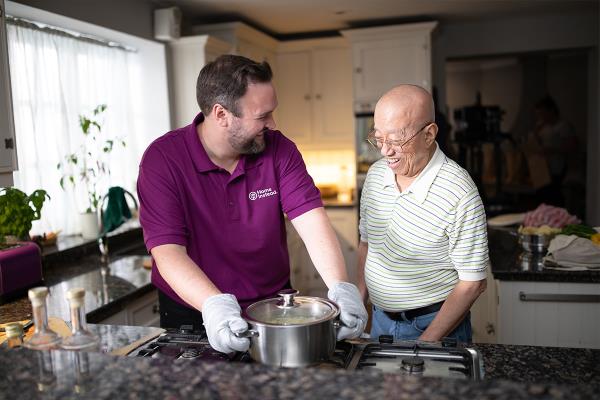
  2. WHAT IS IN-HOME CARE?: Also, referred to as custodial care or homemaker services, in-home care is care which is provided in a person's home by family or caregivers for people who otherwise might require institutional care. In-home care is usually carried out by professional caregivers who perform only non-medical care and who are supervised by a licensed agency that holds a Home and Community Support Services License (HCSSA). In-home care is paid primarily by private pay or covered by long term care insurance. Medicare does not pay for in-home care because medicare only covers medical expenses and in-home care is considered non-medical. In-home care is not home health care and may include all or some of the following:
    1. Assistance with Activities of Daily Living (ADL's) and Personal Care such as feeding, bathing, toileting, dressing, ambulation and transferring.
    2. Assistance with Instrumental Activities of Daily Living (IADL's) such as light housekeeping, laundry, grocery shopping, errands, meal preparation, medication reminders and companionship.
    3. Personal Assistant Services (PAS) which includes any hands on assistance, incontinent care and bathing.
  3. SUMMARY: In order to remain living at home, most seniors will eventually need to engage the services of both Home Health Care and In-home Care at one point in time. However, home health care is usually short-term in nature and length of time for the visits. For example, a home health physical therapist may come out for a couple of times per week and for several weeks to help a senior rehabilitate after hip surgery. On the other hand, in-home care may occupy longer periods of time during the day and be used for extended lengths of time. For example, a senior may use the services of a caregiver several hours a day, five days a week for assistance getting bathed, dressed, meals prepared, errands run and having light housekeeping and laundry done. The main difference between home health care and in- home care is that the former is primarily used for medical care while the latter is used for non-medical care. Both home health care and in-home care may be used simultaneous or independent of the other.