Practice Makes Perfect
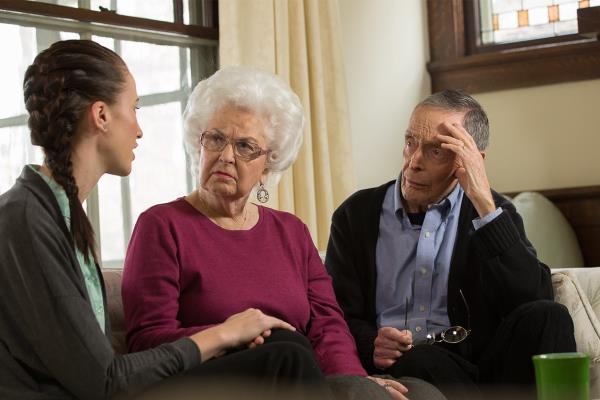
Question: Ever since our 83 year old mother’s health started to decline, my siblings and I can’t seem to agree on how to help her continue to live at home. She has Alzheimer’s disease but still maintains a high level of skill in some areas. Our goal is to keep her engaged in normal daily life activities for as long as possible. Our disagreement is mainly on how much assistance we need to provide for her and in which areas. Any suggestions as how to decide how much care, is enough care?
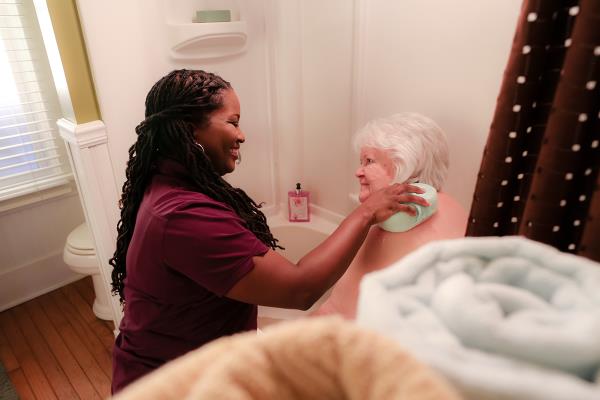
Answer: Continued active involvement in appropriate activities is still the best treatment for Alzheimer disease. Your question of how much should be done for your mom and how much to leave for her to manage is so important, because having too much done for her in the name of health and safety may actually increase her dependency unnecessarily. According to the George G. Glenner Alzheimer Family Center, a good care plan comes first from thorough examination of the person’s strengths and weaknesses, and their personal history. This allows you to focus on maximizing skills, and minimizing problems. Be careful not to over-do your assistance. Doing too much actually creates an “excess disability”. This is a disability created by not allowing a person with a disability to do things for themselves that they may still be able to do. Just as a great athlete or an accomplished musician needs to practice, people with dementia will permanently lose the ability to do something if they do not continually use their skills. Work with your health professional to put together a care plan that addresses this issue. The Alzheimer center also suggests that keeping engaged in the routine of basic daily activities such as eating, dressing, grooming, and walking are so important because these tasks:
- Are habitual skills and do not need good short term memory or reasoning ability.
- Encourage positive feelings.
- Maximize a feeling of health and physical well being.
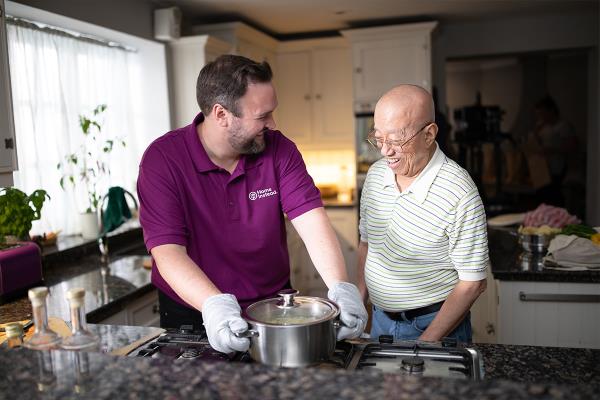
More complex activities of daily living do require more assistance. Activities such as meal preparation, shopping, housework, money management, and social trips are all instrumental ones but are difficult to manage for a person with Alzheimer disease. However, with creative adaptations and planning by family members or other caregivers, your mom can still be provided with a life pattern as normal as possible.
Some hints for successful activities:
- Match the activity to the functioning level of the senior.
- Provide a balance of stimulation by alternating spirited activities with quiet, and difficult with easy.
- Look to the senior’s social history for tasks, hobbies, board and card games, sports etc. they have enjoyed in the past.
- Plan for variety in the types of activities that you arrange. Each day should include mental, emotional and physical stimulation including large motor activity such as walking and fine motor activity such as doing a jigsaw puzzle.
- Make sure the activities are as adult as possible so as to give the senior a sense of purpose.
This information is provided for educational purposes only and should not be considered as a recommendation for a specific course of action.